Error parsing IP fragment: unable to parse character reference ' Conditions in https://www.whocc.no/use_of_atc_ddd/'' (last text = '
' at line 13 column 272
|
Type
|
Reference
|
Content
|
|
web
|
cp2-test.example.org
|
https://cp2-test.example.org/fhirr4
|
|
web
|
tel:+3131599991
|
+3131599991
|
|
web
|
cp2-test.example.org
|
https://cp2-test.example.org/dicom-wado-rs
|
|
web
|
auth.cp1-test.example.org
|
https://auth.cp1-test.example.org/.well-known/oauth-authorization-server
|
|
web
|
cp1-old.example.org
|
https://cp1-old.example.org/fhir
|
|
web
|
cp3-test.example.org
|
https://cp3-test.example.org/fhirr4
|
|
web
|
fhir-stu3.rivas.example.org
|
https://fhir-stu3.rivas.example.org/bgz
|
|
web
|
cp2-test.example.org
|
https://cp2-test.example.org/fhirstu3
|
|
web
|
fhir-stu3.rivas.example.org
|
https://fhir-stu3.rivas.example.org/requests
|
|
web
|
cp1-test.example.org
|
https://cp1-test.example.org/fhir
|
|
web
|
cp1-test.example.org
|
https://cp1-test.example.org/fhirr4
|
|
web
|
cp3-test.example.org
|
https://cp3-test.example.org/fhirstu3
|
|
web
|
tel:+31301234567
|
+31301234567
|
|
web
|
www.rivas.nl
|
https://www.rivas.nl
|
|
web
|
tel:+31612345678
|
+31612345678
|
|
web
|
www.minvws.nl
|
IG © 2026+ Ministerie van Volksgezondheid, Welzijn en Sport
.
Package nl.generiekefuncties.fhir#26.1.1 based on FHIR 4.0.1
.
Generated
2026-11-19
Links: Table of Contents |
QA Report |
Directory of published versions |
Propose a change / get involved
License: this implementation guide is dedicated to the public domain under Creative Commons CC0 1.0 Universal (CC0-1.0).
|
|
web
|
github.com
|
Links: Table of Contents
|
QA Report
|
Directory of published versions
|
Propose a change / get involved
License: this implementation guide is dedicated to the public domain under Creative Commons CC0 1.0 Universal (CC0-1.0)
.
|
|
web
|
creativecommons.org
|
Links: Table of Contents
|
QA Report
|
Directory of published versions
|
Propose a change / get involved
License: this implementation guide is dedicated to the public domain under Creative Commons CC0 1.0 Universal (CC0-1.0)
.
|
|
web
|
www.omg.org
|
ServD

|
|
web
|
www.omg.org
|
ServD
|
|
web
|
snomed.info
|
408467006
|
|
web
|
snomed.info
|
394577000
|
|
web
|
snomed.info
|
394578005
|
|
web
|
snomed.info
|
421661004
|
|
web
|
snomed.info
|
408462000
|
|
web
|
snomed.info
|
394579002
|
|
web
|
snomed.info
|
394804000
|
|
web
|
snomed.info
|
394580004
|
|
web
|
snomed.info
|
394803006
|
|
web
|
snomed.info
|
408480009
|
|
web
|
snomed.info
|
408454008
|
|
web
|
snomed.info
|
394809005
|
|
web
|
snomed.info
|
394592004
|
|
web
|
snomed.info
|
394600006
|
|
web
|
snomed.info
|
394601005
|
|
web
|
snomed.info
|
394581000
|
|
web
|
snomed.info
|
408478003
|
|
web
|
snomed.info
|
394812008
|
|
web
|
snomed.info
|
408444009
|
|
web
|
snomed.info
|
394582007
|
|
web
|
snomed.info
|
408475000
|
|
web
|
snomed.info
|
410005002
|
|
web
|
snomed.info
|
394583002
|
|
web
|
snomed.info
|
419772000
|
|
web
|
snomed.info
|
394584008
|
|
web
|
snomed.info
|
408443003
|
|
web
|
snomed.info
|
394802001
|
|
web
|
snomed.info
|
394915009
|
|
web
|
snomed.info
|
394814009
|
|
web
|
snomed.info
|
394808002
|
|
web
|
snomed.info
|
394811001
|
|
web
|
snomed.info
|
408446006
|
|
web
|
snomed.info
|
394586005
|
|
web
|
snomed.info
|
394916005
|
|
web
|
snomed.info
|
408472002
|
|
web
|
snomed.info
|
394597005
|
|
web
|
snomed.info
|
394598000
|
|
web
|
snomed.info
|
394807007
|
|
web
|
snomed.info
|
419192003
|
|
web
|
snomed.info
|
408468001
|
|
web
|
snomed.info
|
394593009
|
|
web
|
snomed.info
|
394813003
|
|
web
|
snomed.info
|
410001006
|
|
web
|
snomed.info
|
394589003
|
|
web
|
snomed.info
|
394591006
|
|
web
|
snomed.info
|
394599008
|
|
web
|
snomed.info
|
394649004
|
|
web
|
snomed.info
|
408470005
|
|
web
|
snomed.info
|
394585009
|
|
web
|
snomed.info
|
394821009
|
|
web
|
snomed.info
|
422191005
|
|
web
|
snomed.info
|
394594003
|
|
web
|
snomed.info
|
416304004
|
|
web
|
snomed.info
|
418960008
|
|
web
|
snomed.info
|
394882004
|
|
web
|
snomed.info
|
394806003
|
|
web
|
snomed.info
|
394588006
|
|
web
|
snomed.info
|
408459003
|
|
web
|
snomed.info
|
394607009
|
|
web
|
snomed.info
|
419610006
|
|
web
|
snomed.info
|
418058008
|
|
web
|
snomed.info
|
420208008
|
|
web
|
snomed.info
|
418652005
|
|
web
|
snomed.info
|
418535003
|
|
web
|
snomed.info
|
418862001
|
|
web
|
snomed.info
|
419365004
|
|
web
|
snomed.info
|
418002000
|
|
web
|
snomed.info
|
419983000
|
|
web
|
snomed.info
|
419170002
|
|
web
|
snomed.info
|
419472004
|
|
web
|
snomed.info
|
394539006
|
|
web
|
snomed.info
|
420112009
|
|
web
|
snomed.info
|
409968004
|
|
web
|
snomed.info
|
394587001
|
|
web
|
snomed.info
|
394913002
|
|
web
|
snomed.info
|
408440000
|
|
web
|
snomed.info
|
418112009
|
|
web
|
snomed.info
|
419815003
|
|
web
|
snomed.info
|
394914008
|
|
web
|
snomed.info
|
408455009
|
|
web
|
snomed.info
|
394602003
|
|
web
|
snomed.info
|
408447002
|
|
web
|
snomed.info
|
394810000
|
|
web
|
snomed.info
|
408450004
|
|
web
|
snomed.info
|
408476004
|
|
web
|
snomed.info
|
408469009
|
|
web
|
snomed.info
|
408466002
|
|
web
|
snomed.info
|
408471009
|
|
web
|
snomed.info
|
408464004
|
|
web
|
snomed.info
|
408441001
|
|
web
|
snomed.info
|
408465003
|
|
web
|
snomed.info
|
394605001
|
|
web
|
snomed.info
|
394608004
|
|
web
|
snomed.info
|
408461007
|
|
web
|
snomed.info
|
408460008
|
|
web
|
snomed.info
|
394606000
|
|
web
|
snomed.info
|
408449004
|
|
web
|
snomed.info
|
418018006
|
|
web
|
snomed.info
|
394604002
|
|
web
|
snomed.info
|
394609007
|
|
web
|
snomed.info
|
408474001
|
|
web
|
snomed.info
|
394610002
|
|
web
|
snomed.info
|
394611003
|
|
web
|
snomed.info
|
408477008
|
|
web
|
snomed.info
|
394801008
|
|
web
|
snomed.info
|
408463005
|
|
web
|
snomed.info
|
419321007
|
|
web
|
snomed.info
|
394576009
|
|
web
|
snomed.info
|
394590007
|
|
web
|
snomed.info
|
409967009
|
|
web
|
snomed.info
|
408448007
|
|
web
|
snomed.info
|
419043006
|
|
web
|
snomed.info
|
394612005
|
|
web
|
snomed.info
|
394733009
|
|
web
|
snomed.info
|
394732004
|
|
web
|
www.rfc-editor.org
|
De metadata van een resource server, met onder meer de authorization servers die bij het endpoint horen ( RFC 9728
).
|
|
web
|
www.rfc-editor.org
|
Het JWT dat de client bij elk tokenrequest ondertekent ( RFC 7523
), met de zorgaanbieder ( sub
), het doel ( purpose_of_use
), de bron en de machtiging, en met het type nl-gf-jwt-bearer-assertion+jwt
. Het vervangt het RAR-object ( authorization_details
) uit de notitie.
|
|
web
|
www.rfc-editor.org
|
Besluit.
Bij de dienstverlener. De client presenteert de machtiging van de opvragende zorgaanbieder bij elk tokenrequest ( GF-AUTN-ADR-7
); de resource server van de bron publiceert de machtiging van de bronhoudende zorgaanbieder in zijn Protected Resource Metadata
( RFC 9728
).
|
|
web
|
wetten.overheid.nl
|
Verstrekking aan wie rechtstreeks betrokken is bij de uitvoering van de behandelingsovereenkomst ( WGBO
, art. 7:457 lid 2); AVG, art. 9 lid 2 onder h, met UAVG
, art. 30 lid 3 onder a.
|
|
web
|
wetten.overheid.nl
|
Verstrekking aan wie rechtstreeks betrokken is bij de uitvoering van de behandelingsovereenkomst ( WGBO
, art. 7:457 lid 2); AVG, art. 9 lid 2 onder h, met UAVG
, art. 30 lid 3 onder a.
|
|
web
|
eur-lex.europa.eu
|
Zoals bij TREAT
, ook als er geen behandelingsovereenkomst is, bijvoorbeeld bij een bewusteloze patiënt (WGBO, art. 7:464). Daarnaast mag een zorgverlener volgens de EHDS
ter bescherming van de vitale belangen van de patiënt ook gegevens inzien die de patiënt heeft afgeschermd (art. 11 lid 5), en kan de nationale wet toegang toestaan ondanks een opt-out (art. 10 lid 2).
|
|
web
|
eur-lex.europa.eu
|
Verstrekking voor wetenschappelijk onderzoek, onder voorwaarden ook zonder toestemming (WGBO, art. 7:458; AVG, art. 9 lid 2 onder j en art. 89, met UAVG, art. 24); voor secundair gebruik daarnaast de EHDS ( Verordening (EU) 2025/327
).
|
|
web
|
eur-lex.europa.eu
|
Doelbinding.
Een dienstverlener die gegevens uitgeeft voor onderzoek ( HRESCH-custodian
), kan geen gegevens verzamelen onder de noemer behandeling ( AVG
, art. 5 lid 1 onder b).
|
|
web
|
www.rfc-editor.org
|
De host van de client_id
staat als DNS-naam in het clientcertificaat, en het document noemt die host in tls_client_auth_san_dns
( RFC 8705
, §2.1.2) in plaats van de subject DN
. Zo speelt de schrijfwijze van de subject DN
geen rol (S26), en verandert het document niet bij een certificaatvernieuwing. De authorization server cachet het document hoogstens 24 uur en leest hoogstens 32 kB.
|
|
web
|
www.rfc-editor.org
|
Client credentials
( RFC 6749
, paragraaf 4.4): de machtiging staat in een Client ID Metadata Document per zorgaanbieder ( M7
), en het verzoek bevat alleen mTLS en een RAR-object.
|
|
web
|
www.rfc-editor.org
|
Token exchange met delegatie
( RFC 8693
): de machtiging is het subject_token
, en de client, die zich met mTLS authenticeert, is de actor
.
|
|
web
|
www.rfc-editor.org
|
JWT bearer
( RFC 7523
, M8
): de client ondertekent per verzoek een assertion voor één authorization server, met de machtiging en de context van het verzoek.
|
|
web
|
www.rfc-editor.org
|
Besluit.
JWT bearer
( M8
). De client ondertekent bij elk tokenrequest een assertion met de sleutel van zijn certificaat. De assertion bevat de zorgaanbieder ( sub
), het doel en de bron (de velden die de notitie in het RAR-object had), en de machtiging, in een object met per attestatietype een lijst. Zij geldt voor één authorization server ( aud
), hoogstens 5 minuten en één keer ( jti
). Het type nl-gf-jwt-bearer-assertion+jwt
in de header ( typ
) maakt haar herkenbaar naast andere verzoeken met de JWT bearer grant ( RFC 8725
, paragraaf 3.11). De authorization server controleert de assertion, de machtiging en may_act.sub
tegen het certificaat, en legt in het access token de zorgaanbieder vast in sub
en de dienstverlener in act
( RFC 8693
, paragraaf 4.1).
|
|
web
|
www.rfc-editor.org
|
De authorization server geeft geen refresh token
uit ( RFC 7521
, paragraaf 4.1): na het verlopen van het access token vraagt de client een nieuw aan, met een nieuwe assertion.
|
|
web
|
www.rfc-editor.org
|
mTLS met het eigen certificaat van de organisatie die de client beheert ( tls_client_auth
, RFC 8705
), in plaats van private_key_jwt
. Het access token is aan dat certificaat gebonden, in plaats van met DPoP.
|
|
web
|
www.rfc-editor.org
|
De authorization server en de resource server controleren de intrekkingsstatus van het clientcertificaat, en weigeren als die onbekend is. Alleen de bron, dat wil zeggen de zorgaanbieder of zijn dienstverlener met een custodian
-machtiging, of een voorziening in hun eigen domein, zoals een load balancer, beëindigt de TLS-verbinding en geeft het certificaat door volgens RFC 9440
. Een andere tussenpartij doet dat niet. Een tussenpartij aan de kant van de aanvrager is zelf de client, met een eigen certificaat en een eigen machtiging.
|
|
web
|
github.com
|
Voor een paar Authorization Server producten, waarvan bekend is dat ze binnen de zorgsector gebruikt worden, is een inschatting gemaakt van de benodigde werkzaamheden voor bovenstaand voorstel. De selectie van Keycloak en Duende is arbitrair. Microsoft Entra ID en de Nuts node zijn ook onderzocht. Microsoft Entra ID lijkt diverse protocollen NIET te ondersteunen en is hiervoor niet aan te passen; er zijn beschrijvingen gevonden waarin proxies en/of andere AS-producten (waaronder Duende) gebruikt worden die een 'brugfunctie' naar Entra ID invullen. Entra ID is daarom niet opgenomen in onderstaande tabel. De Nuts node lijkt (ook) diverse protocollen NIET te ondersteunen. Echter, hier wordt de aanname gedaan dat de ontwikkelaars van de Nuts node in staat zijn om deze functionaliteit in te bouwen; iets dergelijks heeft men al gedaan in Proof-of-Concepts voor de Generieke Functies (zie Nuts Knooppunt
). Ook de Nuts Node komt daarom niet terug in onderstaande tabel.
|
|
web
|
www.rfc-editor.org
|
De zorgaanbieder wijst in de LRZa één vertrouwde dienstverlener aan, of vult die rol zelf in. Die beheert het UZI-servercertificaat van de zorgaanbieder, en geeft daarmee machtigingen uit aan zichzelf en aan de andere dienstverleners van de zorgaanbieder, na goedkeuring door de zorgaanbieder. De machtiging is een SD-JWT VC, gebonden aan een sleutel van de client ( cnf
). De client presenteert haar bij elk tokenrequest in een token exchange ( RFC 8693
), met een key binding
-JWT die ook het RAR-object ondertekent.
|
|
web
|
www.rdi.nl
|
Implementatie:
bij clients en authorization servers zoals M1. Daarnaast bouwt elke uitgever een nieuwe voorziening (OpenID4VCI, eHerkenning, vernieuwing, logging), en erkent het GIS de uitgevers, met gelijke eisen, toezicht en een vertrouwenslijst. Elke uitgever wordt vertrouwensdienstverlener onder eIDAS en valt onder NIS2. Het GIS kan daarnaast kwalificatie als gekwalificeerde vertrouwensdienstverlener (QTSP) eisen, met een audit en een besluit van de RDI
binnen drie maanden. Niet haalbaar in Q1 2027.
|
|
web
|
www.rfc-editor.org
|
De machtiging wordt uitgegeven zoals bij M7, zonder sleutel van de client. De client vraagt een token aan met de JWT bearer grant ( RFC 7523
), met een assertion die hij bij elk tokenrequest ondertekent met de sleutel van zijn certificaat, zoals bij UDAP het software statement
( R1
). De assertion bevat de machtiging, ongewijzigd als SD-JWT VC, en de velden van het RAR-object uit de notitie: de zorgaanbieder ( sub
), het doel en de bron. Zij geldt voor één authorization server ( aud
), hoogstens 5 minuten en één keer ( jti
), en heeft het type nl-gf-jwt-bearer-assertion+jwt
( typ
). Andere attestaties, ook attestaties die per verzoek verschillen, kunnen in dezelfde assertion mee. De client heeft één Client ID Metadata Document per dienstverlener, zonder machtiging ( R5
). De resource server van de bron publiceert de machtiging van zijn zorgaanbieder in zijn Protected Resource Metadata
, zoals bij M7. Zie het voorstel
.
|
|
web
|
www.rfc-editor.org
|
De client registreert zich bij elke authorization server met Dynamic Client Registration ( RFC 7591
), volgens het HL7 UDAP Security IG
. Hij ondertekent een software statement
met de sleutel van zijn certificaat, en krijgt een client_id
. UDAP wordt gebruikt in de Verenigde Staten, onder meer in TEFCA. Een software statement
is niet nodig voor de logging volgens NEN 7513, en niet voor de conformiteit van de software, die de EHDS bij de fabrikant legt ( Verordening (EU) 2025/327
, art. 39 lid 5).
|
|
web
|
eur-lex.europa.eu
|
De client registreert zich bij elke authorization server met Dynamic Client Registration ( RFC 7591
), volgens het HL7 UDAP Security IG
. Hij ondertekent een software statement
met de sleutel van zijn certificaat, en krijgt een client_id
. UDAP wordt gebruikt in de Verenigde Staten, onder meer in TEFCA. Een software statement
is niet nodig voor de logging volgens NEN 7513, en niet voor de conformiteit van de software, die de EHDS bij de fabrikant legt ( Verordening (EU) 2025/327
, art. 39 lid 5).
|
|
web
|
berlin-group.org
|
Er is geen registratie. De authorization server leidt de client_id
af uit een vaste identificatie in het certificaat: het organizationIdentifier
(KvK-nummer of OIN) van een PKIoverheid-certificaat, of het URA van een UZI-servercertificaat. Zo werkt ook PSD2: banken identificeren betaaldienstverleners aan hun eIDAS-certificaat ( Berlin Group V2.4.1, §8.8
).
|
|
web
|
www.rfc-editor.org
|
Een vereenvoudigde vorm van R1, zonder software statement
, waarin de authorization server de client_id
toekent, zoals RFC 7591 voorschrijft. De client registreert zich over mTLS bij een server die hem nog niet kent, met tls_client_auth
en de subject DN
van zijn certificaat. Hij bewaart per server de client_id
, en eventueel een registration access token
om de registratie later bij te werken ( RFC 7592
).
|
|
web
|
aaronparecki.com
|
Er is geen registratie: de client_id
is een HTTPS-URL op een domein van de beheerder van de client, waar de clientmetadata wordt gepubliceerd ( OAuth Client ID Metadata Document
, IETF-draft). In open netwerken heeft het de voorkeur boven registratie volgens RFC 7591 ( Parecki
). De authorization server haalt het document op en bewaart het volgens de cache-headers. De host van de client_id
staat als DNS-naam in het clientcertificaat. Bij M8 is er één document per dienstverlener; bij M7 één per zorgaanbieder, met de machtiging erin.
|
|
web
|
www.rfc-editor.org
|
The JWT that the Authorization Client signs for each token request, with its mandate and the context of the request ( RFC 7523
). See Assertion
.
|
|
web
|
www.rfc-editor.org
|
OAuth 2.0 ( RFC 6749
) with the JWT bearer grant ( RFC 7521
, RFC 7523
) and the security measures of the FAPI 2.0 Security Profile
;
|
|
web
|
www.rfc-editor.org
|
OAuth 2.0 ( RFC 6749
) with the JWT bearer grant ( RFC 7521
, RFC 7523
) and the security measures of the FAPI 2.0 Security Profile
;
|
|
web
|
www.rfc-editor.org
|
OAuth 2.0 ( RFC 6749
) with the JWT bearer grant ( RFC 7521
, RFC 7523
) and the security measures of the FAPI 2.0 Security Profile
;
|
|
web
|
openid.net
|
OAuth 2.0 ( RFC 6749
) with the JWT bearer grant ( RFC 7521
, RFC 7523
) and the security measures of the FAPI 2.0 Security Profile
;
|
|
web
|
www.rfc-editor.org
|
mTLS client authentication ( tls_client_auth
) and certificate-bound access tokens ( RFC 8705
);
|
|
web
|
www.rfc-editor.org
|
Authorization Server Metadata ( RFC 8414
) and Protected Resource Metadata ( RFC 9728
);
|
|
web
|
www.rfc-editor.org
|
Authorization Server Metadata ( RFC 8414
) and Protected Resource Metadata ( RFC 9728
);
|
|
web
|
openid.net
|
SD-JWT VC ( draft-ietf-oauth-sd-jwt-vc
) for the mandate, issued with OpenID4VCI
.
|
|
web
|
www.rfc-editor.org
|
The Authorization Server is operated by the source's service provider, and can serve many care providers. It SHALL support GF-AUTN-4
and GF-AUTN-6
, and publish its metadata ( RFC 8414
), with at least:
|
|
web
|
openid.net
|
The service provider requests a mandate from the Mandate Issuer with OpenID4VCI
, and authenticates with its certificate (mTLS). The request names the care provider and the requested mandate codes.
|
|
web
|
www.rfc-editor.org
|
It retrieves the resource's metadata ( RFC 9728
). RFC 9728 inserts the well-known path between the host and the path of the resource. For https://fhir.dienstverlener-b.nl/zorgaanbieder-b/fhir
the request is:
|
|
web
|
www.rfc-editor.org
|
The Authorization Client requests an access token with the JWT bearer grant ( RFC 7523
, §2.1), over mTLS with its certificate ( tls_client_auth
). The assertion
is a JWT that the client signs for this request, with its mandate, the care provider on whose behalf it acts, and the purpose. The client_id
is the URL of its Client ID Metadata Document
.
|
|
web
|
www.rfc-editor.org
|
The authorization server SHALL NOT issue a refresh token ( RFC 7521
, §4.1). When the access token expires, the client requests a new one with a new assertion.
|
|
web
|
www.rfc-editor.org
|
not connect to addresses that resolve to special-use IP addresses ( RFC 6890
);
|
|
web
|
www.rfc-editor.org
|
tls_client_auth_san_dns
equals the host of the client_id
( RFC 8705
, §2.1.2);
|
|
web
|
www.rfc-editor.org
|
Assertion
( RFC 7523
, §3).
-
typ
in the JOSE header is nl-gf-jwt-bearer-assertion+jwt
.
-
The signature is valid for the first certificate in
x5c
, which equals the client certificate of the connection, with an algorithm allowed by FAPI 2.0 (PS256, ES256 or EdDSA).
-
iss
equals the client_id
parameter, and aud
is the issuer identifier of this authorization server ( RFC 8414
), as a single value.
-
exp
has not passed and is at most 5 minutes after iat
, and jti
has not been used before. The authorization server keeps the jti
values of a client until their exp
.
-
attestations
contains exactly one mandate, under the attestation type URA-signed-mandate
, as an SD-JWT without disclosures and without key binding JWT.
|
|
web
|
www.rfc-editor.org
|
iss
equals the client_id
parameter, and aud
is the issuer identifier of this authorization server ( RFC 8414
), as a single value.
|
|
web
|
www.rfc-editor.org
|
The access token is opaque to the client. It SHALL record on whose behalf access is granted ( sub
, the URA from the mandate), which service provider acts ( client_id
, and the service provider identifier in act.sub
as in RFC 8693
, §4.1), the jti
of the mandate and of the assertion, purpose_of_use
, locations_organization_id
and locations
, and the hash of the client certificate ( cnf.x5t#S256
, RFC 8705). How the authorization server and resource server exchange it, as a signed token or through token introspection ( RFC 7662
), is up to them.
|
|
web
|
www.rfc-editor.org
|
The assertion is a JWT ( RFC 7523
, §3) that the Authorization Client creates and signs for each token request. It signs it with the private key of its client certificate, with an algorithm allowed by FAPI 2.0 (PS256, ES256 or EdDSA). The JOSE header contains typ
nl-gf-jwt-bearer-assertion+jwt
and that certificate in x5c
.
|
|
web
|
www.rfc-editor.org
|
The typ
identifies the assertion as one of this profile (explicit typing, RFC 8725
, §3.11). An authorization server that accepts other assertions with the JWT bearer grant as well SHALL apply the rules on this page only to an assertion with typ
nl-gf-jwt-bearer-assertion+jwt
, and SHALL NOT accept an assertion with that typ
under other rules. A mandate ( typ
dc+sd-jwt
) or another JWT can therefore not be used as an assertion, nor the other way around.
|
|
web
|
www.rfc-editor.org
|
The issuer identifier of the authorization server ( RFC 8414
), as a single value.
|
|
web
|
www.rfc-editor.org
|
Only the source, that is the care provider or its service provider with a <purpose>-custodian
mandate, or a load balancer or proxy in their own domain, MAY terminate the TLS connection to the authorization server or resource server. It forwards the client certificate as in RFC 9440
: it removes any incoming certificate header, and the authorization server or resource server accepts the certificate only from that proxy, over a protected connection (§4). All checks on this page then apply to the forwarded certificate. Other intermediaries SHALL NOT terminate the TLS connection. An intermediary on the requesting side acts as a client itself, with its own certificate, Client ID Metadata Document and mandate.
|
|
web
|
logius-standaarden.github.io
|
An OIN has 20 digits: a prefix of 8 digits for the register, the number in that register, and a suffix of zeros. Prefix 00000003
stands for a KvK number of 8 digits, followed by 0000
. Other prefixes, such as 00000001
(RSIN) and 00000004
(SubOIN), do not contain a KvK number ( OIN Stelsel
, 6.1 and
6.2).
|
|
web
|
cp.pkioverheid.nl
|
The PKIoverheid PvE requires organizationIdentifier
in server certificates since version 5.0 (June 2024), with an identifier as in ETSI EN 319 412-1 or an OIN ( PvE v5.4
,
7.1.4.2.2.10). Certificates without it are still in use, with the OIN in serialNumber
. In a PKIoverheid certificate, a serialNumber
of exactly 20 characters is always an OIN (
7.1.4.2.2.3).
|
|
web
|
www.generiekefuncties.nl
|
Let op:
dit handboek is geschreven voor de pilotfase van de generieke functie Adressering. Het is gebaseerd op versie 1.0.0 van het Functioneel en Technisch Ontwerp (FO/TO) Adressering. Ervaringen uit de pilots kunnen tot aanpassingen leiden. De actuele en eerdere versies van het FO/TO staan op www.generiekefuncties.nl/adressering
.
|
|
web
|
www.generiekefuncties.nl
|
Het FO en TO Adressering op www.generiekefuncties.nl/adressering
|
|
web
|
nuts-foundation.github.io
|
TA Routering
|
|
web
|
ontwikkelsupplement.twiin.nl
|
TA Notifications
|
|
web
|
ontwikkelsupplement.twiin.nl
|
TA Workflow
|
|
web
|
ontwikkelsupplement.twiin.nl
|
TA Pull
(concept)
|
|
web
|
www.generiekefuncties.nl
|
Note:
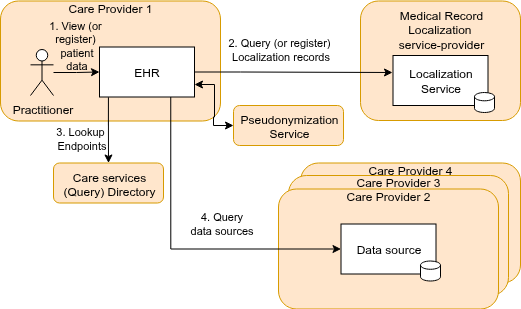
This page is based on version 1.0.0 of the Functional and Technical Design Documents of the Generic Function Addressing (Generieke Functie Adressering). The current and previous versions of this document are available at www.generiekefuncties.nl/adressering
.
|
|
img
|
raw.githubusercontent.com
|
|
|
web
|
github.com
|
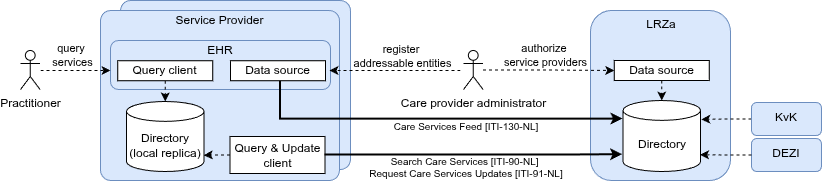
The directory therefore does not carry per-Endpoint terms of use, authentication or security policy. Transport security for publishing to the LRZa Directory is covered under Security
; the broader authentication and security requirements for invoking endpoints are addressed in the dedicated security and authentication tracks (see epics security (#854)
and authentication means (#855)
).
|
|
web
|
github.com
|
A Data Source actor SHALL use mTLS for transport layer security. Qualified certificates from Qualified Trusted Service Providers (like PKIoverheid) should be trusted. ( GF-Adressering, ADR#178
).
The LRZa-Directory SHALL only support creation/updates of OrganizationAffiliations by Care Providers, not by the parties that are being authorized (the .participatingOrganization
).
|
|
web
|
github.com
|
Versioning of information standards / implementation guides per Endpoint (e.g. which zib release or IG package) is to be elaborated in alignment with the national choice of standards ( epic standaardenkeuze
); the NDH fhir-ig extension
is a candidate mechanism.
|
|
web
|
www.generiekefuncties.nl
|
www.generiekefuncties.nl/adressering
|
|
web
|
www.generiekefuncties.nl
|
www.generiekefuncties.nl/lokalisatie
|
|
web
|
www.rfc-editor.org
|
The NL Generic Functions IG uses the normative keywords SHALL
, SHALL NOT
, SHOULD
, SHOULD NOT
and MAY
as defined in RFC 2119
and the IHE conformance conventions
. In short: SHALL
is an absolute requirement, SHALL NOT
an absolute prohibition, SHOULD
/ SHOULD NOT
a recommendation that may be deviated from with the implications understood and weighed, and MAY
is truly optional. Consistent with IHE, this guide uses SHALL
rather than "MUST". Keywords carry this meaning only when written in upper case; the same words in lower case are descriptive, not normative.
|
|
web
|
profiles.ihe.net
|
The NL Generic Functions IG uses the normative keywords SHALL
, SHALL NOT
, SHOULD
, SHOULD NOT
and MAY
as defined in RFC 2119
and the IHE conformance conventions
. In short: SHALL
is an absolute requirement, SHALL NOT
an absolute prohibition, SHOULD
/ SHOULD NOT
a recommendation that may be deviated from with the implications understood and weighed, and MAY
is truly optional. Consistent with IHE, this guide uses SHALL
rather than "MUST". Keywords carry this meaning only when written in upper case; the same words in lower case are descriptive, not normative.
|
|
web
|
www.generiekefuncties.nl
|
Note:
This page is based on version 0.9.0 of the Functional and Technical Design Documents of the Generic Function Localization (Generieke Functie Lokalisatie). The current and previous versions of this document are available at www.generiekefuncties.nl/lokalisatie
.
|
|
web
|
github.com
|
The Pseudonym Registration Service (PRS) provides OPRF evaluations used by clients to derive recipient-scoped pseudonyms from patient identifiers using HKDF and OPRF protocols. See GF Pseudonymization
for the full specification and the reference implementation
.
|
|
web
|
eur-lex.europa.eu
|
The Localization Search Client's access token SHALL include care provider and practitioner details in the authorization_details
object (as required for EU-cross-border exchange by EHDS Implementing Act 2026/2099, Annex 1
).
|
|
web
|
www.rfc-editor.org
|
OPRF + HKDF.
Pseudonyms are derived using HKDF with SHA-256 ( RFC 5869
) and blinded using an OPRF protocol. The PRS only ever sees blinded values.
|
|
web
|
www.rfc-editor.org
|
The client SHALL blind the 32-byte HKDF output with the Blind
function of RFC 9497
, OPRF mode ( modeOPRF
), with ciphersuite ristretto255-SHA512
. This yields two values:
|
|
web
|
github.com
|
A full reference flow including the call to the PRS is available in the
gfmodules-nationale-verwijsindex-registratie-service repository
.
|
|
web
|
github.com
|
Open issues and Architectural Decision Records (ADRs) can be found in the GitHub repository
|
|
web
|
github.com
|
Source code
|
|
web
|
github.com
|
Compare this version to 26.1.0
Significant changes:
|
|
web
|
fhir.generiekefuncties.nl
|
Implementation Guide
|
|
web
|
github.com
|
Source code
|
|
web
|
github.com
|
Compare this version to 26.0.0
Significant changes/Closed issues:
|
|
web
|
fhir.generiekefuncties.nl
|
Implementation Guide
|
|
web
|
github.com
|
Source code
|
|
web
|
github.com
|
Compare this version to 1.0.0
Significant changes/Closed issues:
|
|
web
|
github.com
|
Source code
|
|
web
|
github.com
|
Compare this version to 0.9.0-ballot
Significant changes/Closed issues:
|
|
web
|
github.com
|
Source code
|
|
web
|
github.com
|
Compare this version to v0.1.0
Significant changes/Closed issues:
|
|
web
|
github.com
|
Source code
|
|
web
|
www.rfc-editor.org
|
Canonicalization:
http://hl7.org/fhir/canonicalization/json#static
— the FHIR static
JSON canonicalization. This recursively removes Resource.meta
and every narrative ( .text
) element, and then applies the JSON Canonicalization Scheme (JCS), RFC 8785
. Removing meta
makes the signature robust as the resource moves from the LRZa Directory to replicas (where meta.versionId
, meta.lastUpdated
and tags differ).
|
|
web
|
www.rfc-editor.org
|
Canonicalize the stripped resource with the JSON Canonicalization Scheme (RFC 8785)
. Object keys are sorted, insignificant whitespace is removed, and strings/numbers are serialized deterministically. You can reproduce this with any JCS implementation, e.g. the online JSON Canonicalizer
. The canonical form (a single line, shown wrapped here) is:
|
|
web
|
toolsbase.dev
|
Canonicalize the stripped resource with the JSON Canonicalization Scheme (RFC 8785)
. Object keys are sorted, insignificant whitespace is removed, and strings/numbers are serialized deterministically. You can reproduce this with any JCS implementation, e.g. the online JSON Canonicalizer
. The canonical form (a single line, shown wrapped here) is:
|